
Font Size:
Learn what to watch out for

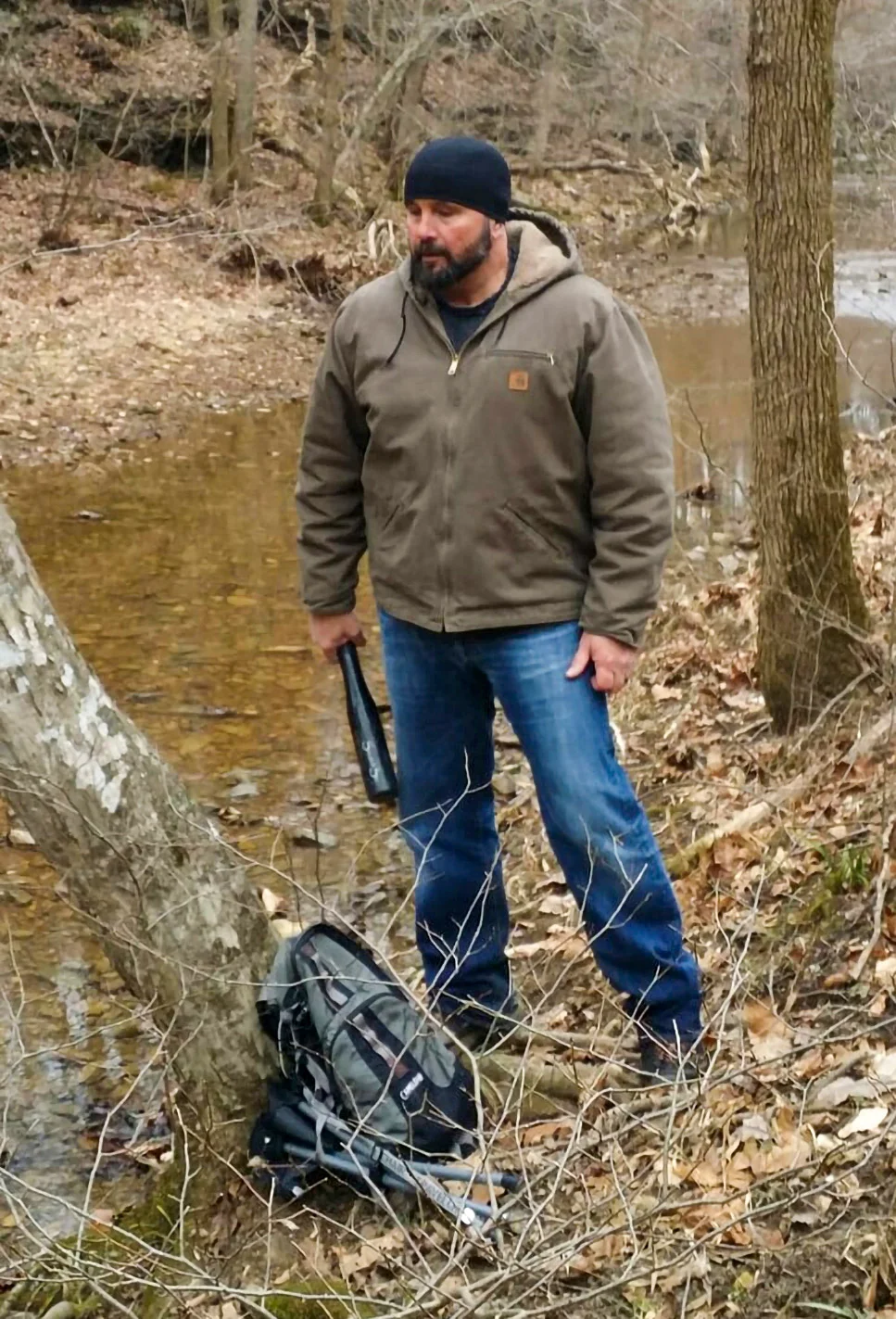
Charlie Raymond carries along a bat on Bigfoot investigations in hopes of communicating with the creatures through tree knocks.
Charlie Raymond knows all the best spots for Bigfoot hunting in Kentucky. As founder of the Kentucky Bigfoot Research Organization, he can tell you where you’re most likely to run into the dark-haired Skunk Man or an Anderson County Sasquatch nicknamed Howdy for its habit of waving at spotters.
So, when a group of Girl Scouts visiting from Ohio wanted to go on their own expedition about 10 years ago, he knew Mammoth Cave was the place to take them. Bigfoot sightings at the edge of the park spiked after a park employee reported seeing what he thought was a bear stand up on two legs and run off.
“I told them Bigfoots are curious, so the best thing to do is go out there with no flashlights and just laugh, talk and act natural,” Charlie says. “Here I’ve got two dozen giddy girls, aged 10 to 14. I said, ‘You’re perfect bait.’”
Much like the skeptical Scout moms who joined them, Charlie didn’t really expect the group to run into Big Mo, the name of the Bigfoot living in the area, according to local legend. But Charlie showed the girls how to knock trees with a baseball bat and make whooping noises, which he believes the creatures use to communicate.
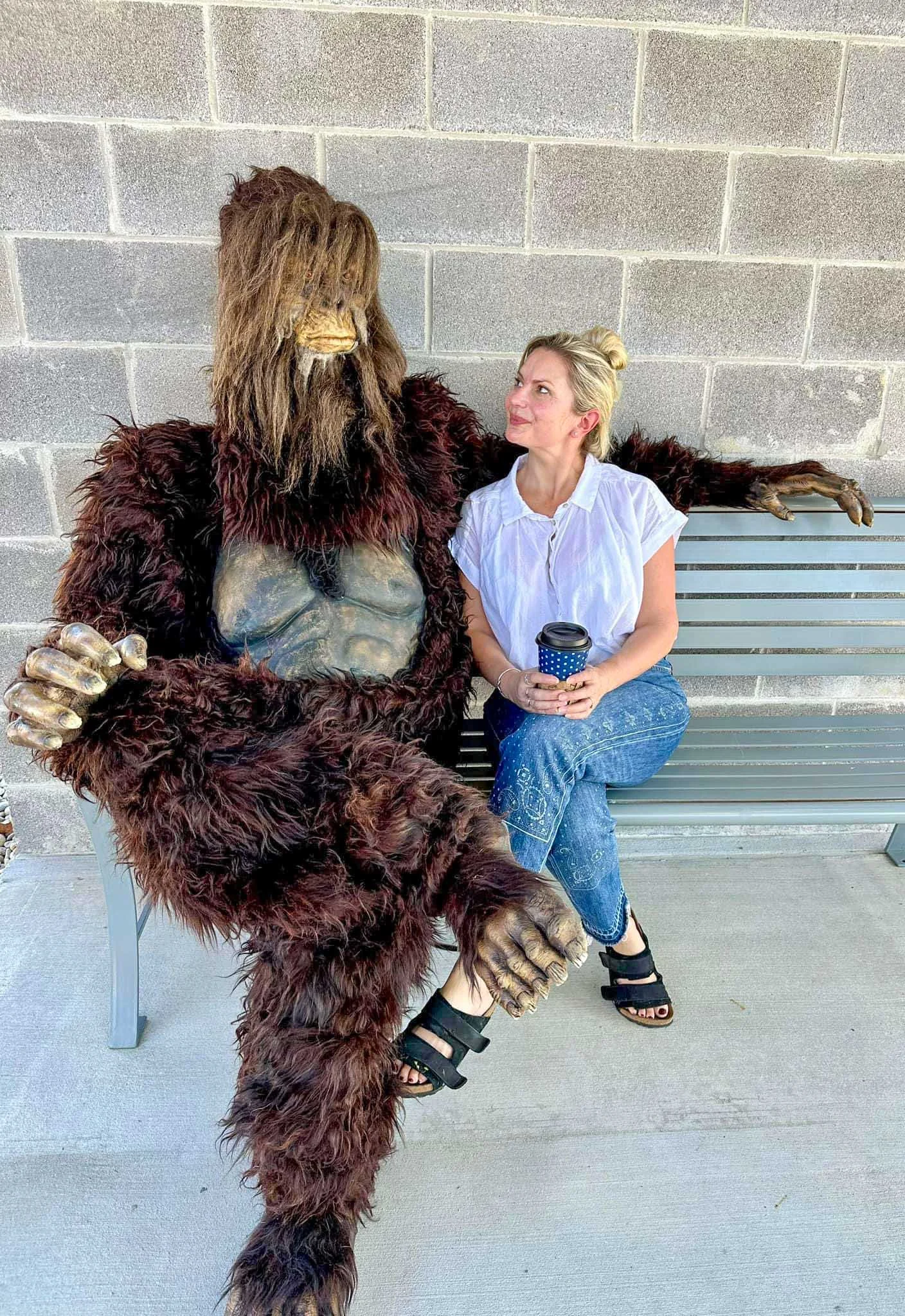
Charlie’s wife, Lyndsey, is a fellow Bigfoot investigator and a police officer with experience in forensics and fingerprint analysis.
Then, they heard a distant knock and whistle in response. Shortly after, there was a loud bang as something big struck the boardwalk they were standing on. The entire group was so startled that Charlie recalls one of the moms making a break for the parking lot, leaving the girls behind.
“I think it thought we were another Bigfoot calling for help, then it stomped or jumped on the boardwalk as kind of a bluff charge,” Charlie says. “But I heard when they drove back to Ohio, those girls didn’t talk about putt-putt or riding horses. All they talked about was that night.”
Charlie is just one of many Bigfoot researchers around the country hoping to find definitive proof of the legendary elusive creatures. Driven by true believers, skeptics and gawkers alike, the ongoing hunt has produced hit TV shows, museums and even festivals that bring people together from all corners.
Robert Dobler, a senior lecturer at the Indiana University Department of Folklore and Ethnomusicology, says the lasting power of these creatures is fundamentally human.
“I think it’s human to need to think about things outside of the everyday or the mundane,” he says. “We’re interested in these creatures that exceed language as often as they exceed categories. These stories are how we can take something that is unknown and unknowable and still find ways to talk about it.”
That sense of the unknown is often inseparable from the creatures themselves. For Bigfoot or his Florida cousin, the Skunk Ape, it might be the wilderness of the forests or swamplands where they’re believed to reside. In West Virginia, the dangers of munitions dumps often conjure sightings of the Mothman. Similarly, in Texas, stories of the Chupacabra are more likely to swirl when anxieties about uncontrollable livestock loss due to disease are at their height.
But that doesn’t mean those stories are entirely false.
“A lot of skeptics think these claims are made for attention,” Robert says. “But the reality is most people know they are vulnerable and subjecting themselves to potential ridicule. So, they’re usually reluctant to talk about it and kind of careful about who they tell.”
David Bakara, who owns the Expedition: Bigfoot museum in Blue Ridge, Georgia, has had much the same experience when people share their stories. Some people are still terrified of their experiences. Others are driven by curiosity. But they are all trying to confront something they know shouldn’t exist.
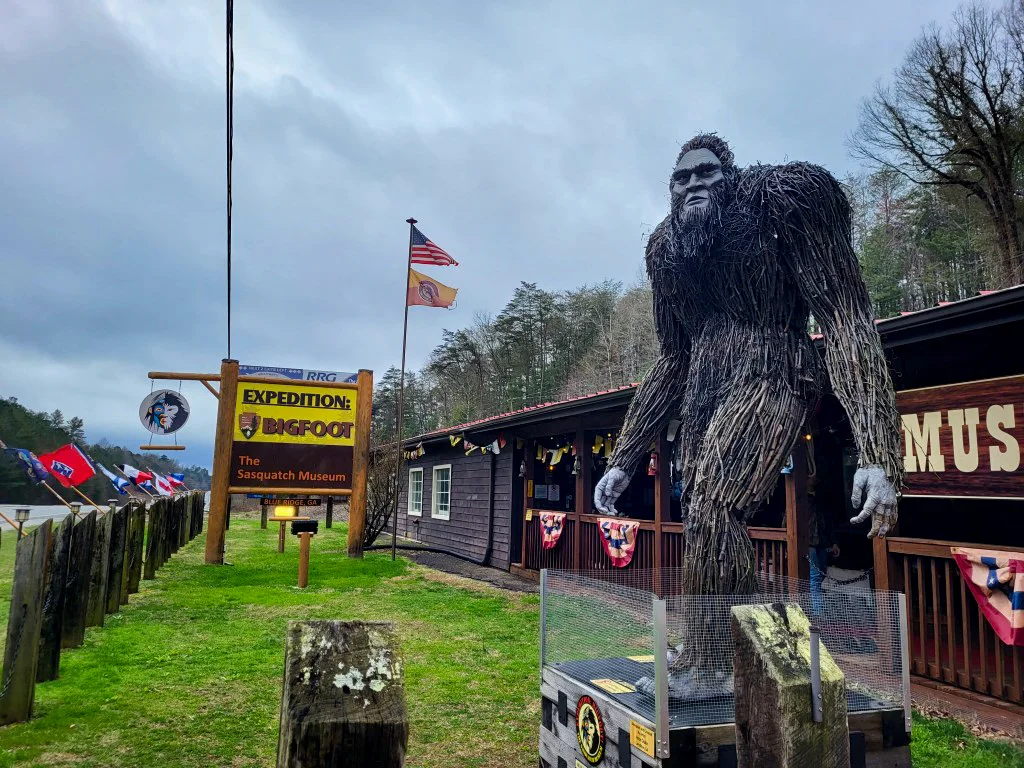
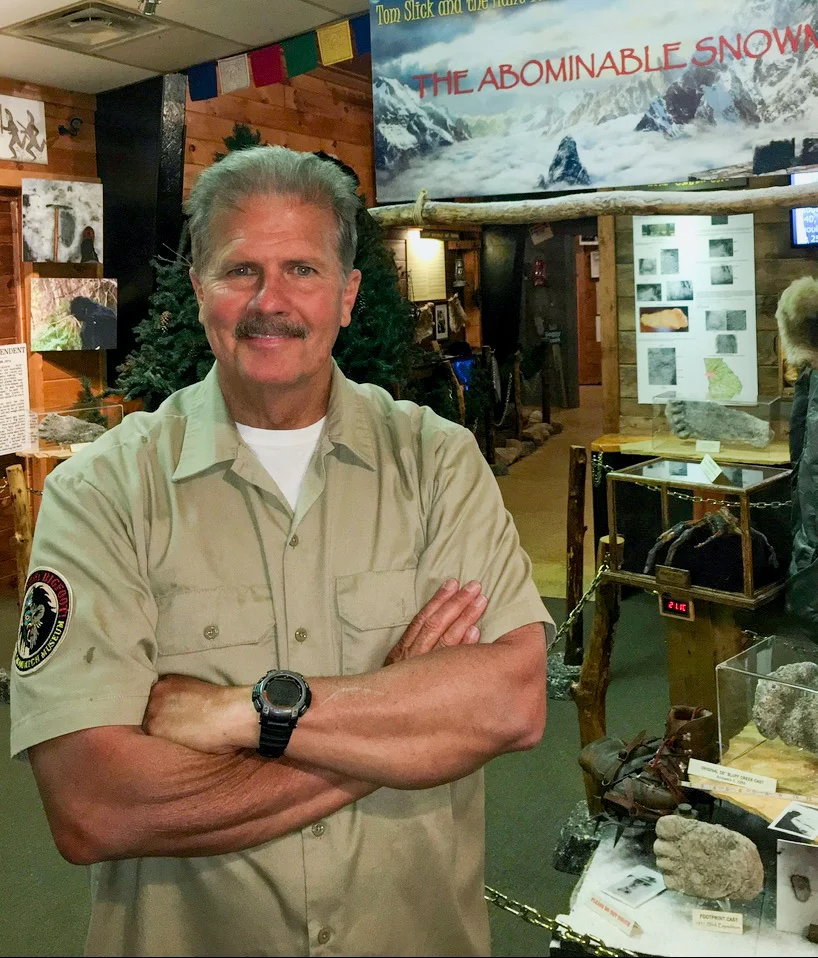
David Bakara opened Expedition: Bigfoot in Blue Ridge, Georgia, in 2016. David built the museum in the style of the roadside attractions he loved as a kid.
“Almost all the Bigfoot researchers I know used to be just normal people that watched football and cooked ribs in the backyard. Then they saw one of these things, and it kind of happened on accident,” David says. “Some things, the more you dig into them, the more boring they are. But that’s not the case here. The more you look into Bigfoot, the more interested you become.”
That allure of the unknown is one of the reasons Charlie helped start the Red River Gorge Bigfoot Festival, which takes place in Stanton, Kentucky, each May. The idea originated with a drive-in screening of “The Legend of Boggy Creek,” a 1972 docudrama about the Fouke Monster, a Bigfoot-like creature spotted around Fouke, Arkansas.
Now, the festival is an opportunity to gather researchers and cryptozoologists to speak to believers and naysayers alike. The celebration is one of many across the country focused on Bigfoot and other local cryptids that give enthusiasts a chance to gather without fear of judgment. But Charlie’s hope is that the experience can also open more people’s minds and encourage them to ask questions.
Barring that, it’s an opportunity to step away from technology and gain a better appreciation for all wildlife, whether it’s the creatures we know or those yet to be discovered.
“There are lots of things in this world we don’t know about. A lot of animals we discover every year,” he says. “We like to say, ‘Leave only footprints. Pick up your trash, stop and smell the flowers every now and then and respect the wilderness.’ Just like Bigfoot.”
Story by Drew Woolley
Photos courtesy of Charlie Raymond