
Font Size:
Learn what to watch out for

Story by Melanie Jones
A cowboy poet, musician, and podcaster, Andy Hedges collects oral histories of the Old West the way rodeo champs collect belt buckles. He’s a champion of cowboy culture, and he has the hat to prove it.
“I think there’s something about that image that just resonates with people,” he says. “They know cowboys represent some of the best of American values—independence, honesty, hard work. And when they hear it, they’re hearing real, authentic stories from cowboy culture. They learn the real truth behind the cowboy image.”
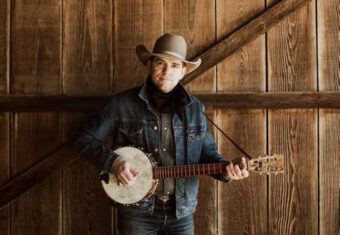
Cowboy poetry also extends to music, with songs like “Rounded Up in Glory” and “Little Joe the Wrangler.” Roy Rogers and Gene Autry brought that style of music to the silver screen, although the Hollywood version is not at the heart of the genre.
Authenticity inspires events across the country, from the Cowpoke Fall Gathering in Loomis, California, to Old West Days in Valentine, Nebraska. Minnesota annually declares a Cowboy Poetry Week, and Andy is returning to Jonesborough, Tennessee, where he performed several times. Cowboy music has even made it to the world-famous Carnegie Hall.
Andy, who lives in Lubbock, Texas, is part of a movement that began in 1985, when a group of cowboys met in Elko, Nevada, for the inaugural National Cowboy Poetry Gathering. It’s where cowboys swap tales, sing songs of the range, and recite poetry that fills lonely days and nights.
What makes a poet a cowboy poet? Andy says his friend Vess Quinlan explains it this way: “He told me there are 2 ways you can make a deposit in the cowboy poetry bank. 1 is by being a working cowboy who writes poetry. The other one is to be a non-cowboy who writes poetry that is so good, it becomes accepted by working cowboys. And, of course, it has to be authentic. It has to ring true to those people.
“A lot of people write or recite cowboy poetry or sing the old cowboy songs or write new songs,” Andy says. “The truth is a lot of us, including myself, have never made a living as a cowboy.”
Andy has spent years immersing himself in cowboy culture’s history, poetry, and music. “I try really hard to represent the culture in an authentic way,” he says.
He grew up hearing stories of his dad, who worked the rodeo circuit before becoming a Primitive Baptist preacher. He watched old Hollywood Westerns and listened to Western music. “All I really thought I wanted to do was be a cowboy,” he says.
But his true obsession with cowboy culture began when he saw an episode of “Austin City Limits” featuring Michael Martin Murphy and friends. Those friends included cowboy poet Waddie Mitchell, cowboy singer Don Edwards and the groups Sons of the San Joaquin and Riders in the Sky. “It just opened that world up to me,” Andy says. “I didn’t realize there were people who still sang the old songs. I’d never heard cowboy poetry before I heard Waddie on that show.”
A self-taught guitarist, young Andy learned some of the old songs. “It was really the beginning of a lifelong obsession with cowboy poetry and cowboy songs,” he says.
By the time he could drive, the homeschooled teen was traveling to cowboy gatherings. By 20, he made it to Elko, where he’s appeared 17 times. Since recording his album of duets, “Ride On, Cowboy,” he and some of the album’s guests have appeared on the Grand Ole Opry and practiced, practiced, practiced their way to Carnegie Hall, where they performed for an appreciative audience in March 2024.
The music has an international audience. While travelers come to the United States for gatherings, some performers also tour overseas. Andy even traveled to Turkmenistan as part of a cultural exchange. “The cowboy has always been the folk hero of America,” he says. “People identify with that image. You know, when I traveled to Turkmenistan, or just travel overseas not performing, when I wear a cowboy hat, people love that and immediately associate that image with the United States.”