
Font Size:
Learn what to watch out for

Story by Jen Calhoun
When Clarissa Black first took Bear, her husky malamute, to visit patients at a Veterans Administration medical center, she had no idea he was about to change hundreds of lives.
Of course, she knew Bear was special. He had a way about him. When someone needed quiet company, Bear could lie perfectly still for hours. If someone was working on mobility, Bear would position himself at the perfect distance, paws up, as if to offer encouragement. And when people looked into the dog’s eyes and spoke to him, he’d cock his head and let out 1 of his husky “woos” right on cue.
“People really felt like he was talking to them,” says Clarissa, whose background in animal science and anthrozoology gave her a deeper insight into the interactions. “They felt seen, and they felt heard.”
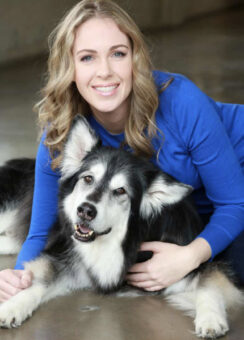
Clarissa’s experience with Bear at the VA hospital sparked the idea for Pets for Vets, a nonprofit organization that matches veterans with specially trained companion animals. Since she founded it more than 15 years ago, the organization has matched more than 800 animals with veterans.
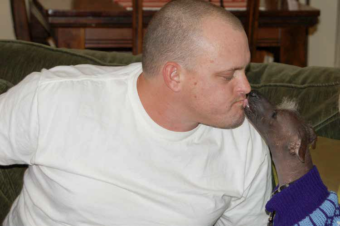
The program generally serves veterans dealing with post-traumatic stress disorder and traumatic brain injuries, but the organization is open to helping any vet who could benefit from a deep connection with a pet. And while the service is completely free to the veterans, it relies on donations from the public and a network of more than 100 volunteer animal trainers across the country.
It’s important to note that Pets for Vets animals aren’t service dogs that have been highly trained to assist people with disabilities. Still, the organization works hard to meet the veterans’ needs as well as the animals’.
“We’re not just asking what the dog gives the veteran,” Clarissa says. “We want to know what the veteran gives the dog.
We’re looking for that reciprocal match where both are getting exactly what they want.”
Once the group approves a veteran’s application for a companion animal, the search gets underway. Clarissa’s experience as a marine mammal trainer taught her that the most powerful relationships happen when both parties get exactly what they need. The process isn’t about finding a good dog. It’s about finding exactly the right dog.
The matching process is not only thorough, it’s personal. Veterans work closely with trainers to identify their needs and prepare for pet ownership. “We spend a lot of time getting to know our veterans, finding out what it is they need, what they’re looking for, and what would be a good fit for them,” she says.
Meanwhile, trainers visit shelters and rescue groups to conduct 1-on-1 “interviews” with potential animal companions, which can include cats, rabbits, and other species, as well. If a veteran enjoys outdoor activities, for example, the trainer might look for a more active dog that loves to fetch and hike. On the other hand, a more sedentary vet might need a peaceful pooch or calm cat.
From there, each animal undergoes foundation training customized for its future human. During this time, which often takes place in a foster situation, trainers enhance what Clarissa calls the animal’s “superpowers,” or the natural behaviors that made them perfect for their veteran in the first place.
“We’re really trying to make this connection where both are getting exactly what they want,” she says. “Ultimately, that connection is what’s going to fulfill them and maybe even heal them. There’s some research out there that suggests that it’s not just any dog, it’s the right dog–– the dog that people feel connected to–– that can help mitigate anxiety and depression.”