
Font Size:
Learn what to watch out for

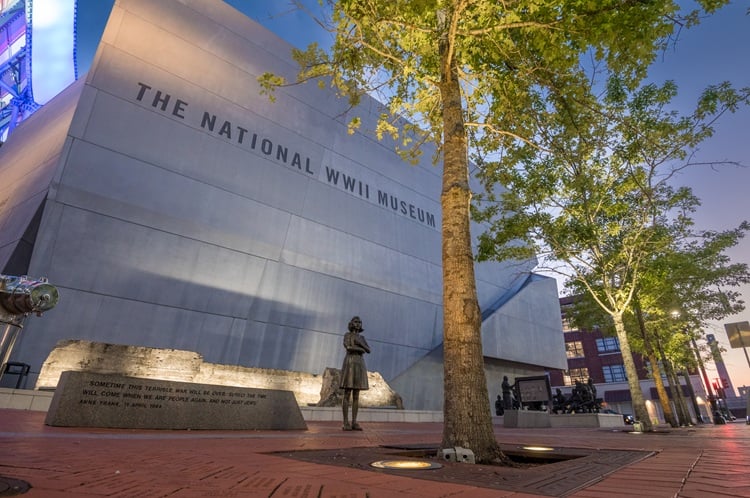
When measured on a grand scale, World War II is almost too immense to comprehend. An estimated 16.4 million people served in the U.S. Armed Forces during the war, with more than 405,000 losing their lives. The United States spent about $341 billion on the war effort, or $4.7 trillion when adjusted for inflation. Globally, the loss of life is estimated to be as high as 85 million people, with adjusted costs surpassing $15 trillion.
On a human level, the war is responsible for countless stories of lives cut short and those forever changed. Many of those accounts are preserved at The National WWII Museum in New Orleans.
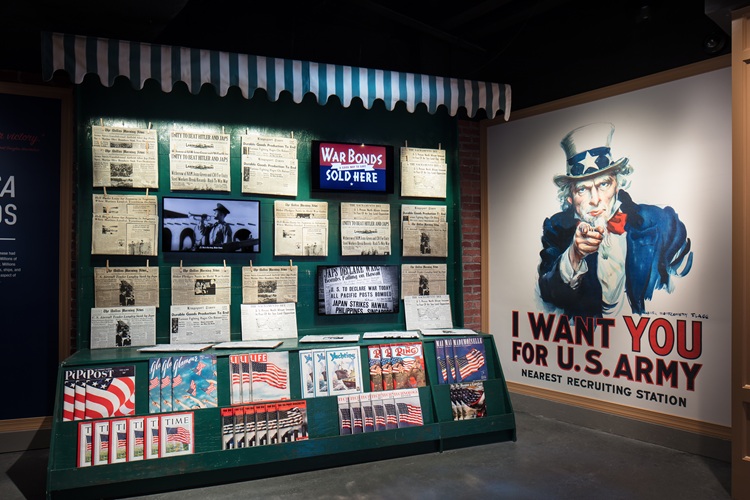
Located on a sprawling campus, The National WWII Museum features seven distinct areas. The experience captures both the grand scale of battle through immersive displays and the small, poignant reminders of the men and women who fought for freedom on the battlefield and the homefront.
While tours can begin in any of the buildings, the Louisiana Memorial Pavilion provides an important orientation and history lesson on the significant events that set the stage for World War II. Exhibits explain the political debates, the attack on Pearl Harbor, rationing of consumer goods, America’s internment camps, segregated military units and the dramatic economic response.
Building 3, Campaigns of Courage, is divided into two parallel exhibits—the Road to Tokyo and the Road to Berlin. Each brings to life the hard-fought victories and the devastating losses on the long journey to end the war. Battles in the Pacific are recounted in a gallery that places visitors in grueling conditions from Guadalcanal and the Philippines to the haunting scenes from the aftermath of the atomic bombs dropped on Hiroshima and Nagasaki. European battles are revisited with landscapes ranging from fortified beaches and bomb-torn villages to frozen forests and unimaginable death camps.
Other buildings include the Solomon Victory Theater with the 4D movie experience “Beyond All Boundaries,” narrated by Tom Hanks. The Liberation Pavilion explores the postwar years and the war’s continuing impact. At the US Freedom Pavilion: The Boeing Center, visitors can get up close with WWII tanks, trucks and planes. Building 7, the John E. Kushner Restoration Pavilion, may be the last on the list, but it is worth including to see the museum’s ongoing restoration work. The space is dominated by the patrol torpedo boat PT-305.
With so many stories to tell, it is difficult to tour the entire museum complex in just one day. Two-day passes are available, and memberships include unlimited regular admission. Learn more at nationalww2museum.org.
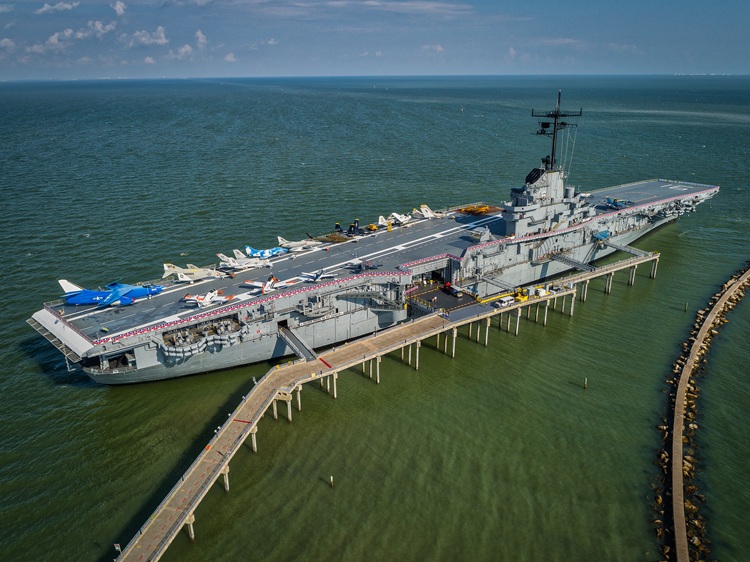
With their sailing days long behind them, a few of America’s World War II ships continue to serve their country. Today, the mission is to honor those who served and educate about a time that is slipping away from living memory. Here are a few treasured museum ships that welcome visitors to come aboard.
After earning nine battle stars, the Mighty A battleship and its crew of 2,500 led the American fleet into Tokyo Bay on Sept. 5, 1945. The ship is joined at Battleship Memorial Park by the USS Drum, the oldest American submarine on public display
Learn the story of how the Kidd became the only U.S. Navy ship allowed to fly the Jolly Roger flag of piracy. Check before planning a visit, as the Kidd has been in dry dock for repairs and was awaiting a higher water level to return home.
Commissioned in 1943, the ship was the Navy’s oldest working carrier when decommissioned in 1991. In 1980, it became the first aircraft carrier in U.S. history to have women stationed aboard as crew members.
The battleship served in every major Pacific naval offensive during World War II, earning 15 battle stars. It is the state’s official memorial to the more than 11,000 North Carolinians who died during the war.
The Navy’s 10th aircraft carrier, the Fighting Lady, was commissioned on April 15, 1943. Patriots Point Naval & Maritime Museum is also home to the USS Laffey, the most decorated World War II-era destroyer still in existence.
Story by Laura McGill